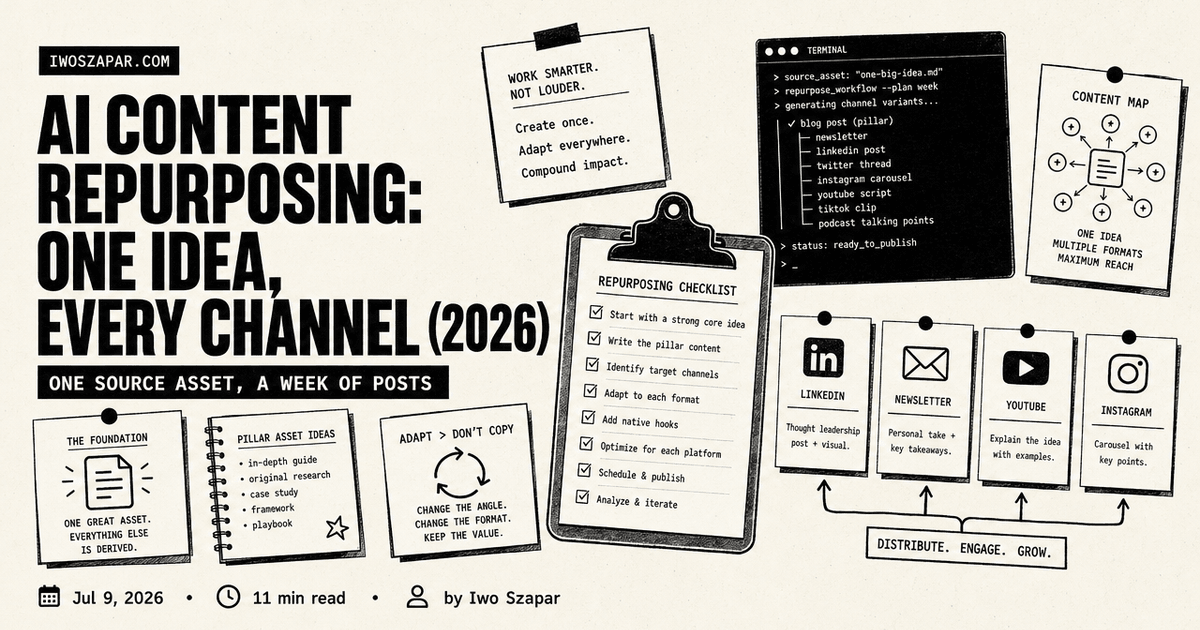
AI Content Repurposing: One Idea, Every Channel (2026)
One source asset, a week of posts
I used to publish a good long-form piece, feel proud for about an hour, then watch it sink because I never turned it into anything else. The essay went out once. The five posts, the newsletter, the short video script, and the two replies I could have pulled from it never got made, because making them felt like doing the work all over again.
That is the problem AI content repurposing solves, and in 2026 it finally solves it well. The idea is not "spin one article into ten thin ones." It is to take a single source asset you already researched and cared about, then reshape it into pieces that read as if they were written for each channel, in your voice, for your audience. The reason it works now is memory: an assistant that has actually learned how you write and who you write for stops producing generic mush and starts producing drafts you only have to edit. Here is the exact workflow I run, step by step.
What is AI content repurposing, really?
AI content repurposing is the practice of taking one source asset (a talk, an essay, a podcast, a launch page) and using an AI assistant to reshape its ideas into formats native to other channels, rather than copy-pasting the same text everywhere. Done right, each output respects the norms of its channel: a thread is not a chopped-up blog post, and an email is not a caption with a subject line bolted on.
The distinction that matters is repurposing versus recycling. Recycling is posting the same paragraph on four platforms and hoping. Repurposing keeps the argument and rebuilds the delivery. A well-repurposed piece can look nothing like its source on the surface while carrying the same spine underneath.
The catch has always been effort. Reshaping is slower than writing was, because you are translating one shape into five. AI collapses that translation cost, but only if it knows two things most tools do not have on hand: how you sound, and who is on the other end.
If the idea of manually re-filing your voice and audience into every tool sounds like the grind you are trying to escape, that is exactly the part worth handing off. Iwo's Second Brain, on Iwo's MemoryOS, keeps that memory for you so the assistant recalls it instead of you retyping it. The free Health Check is the zero-risk first step: it scores what your current setup already remembers, with no commitment.
Why does memory change repurposing?
Most repurposing tools are stateless. You paste your article, you get a caption, and the tool has no memory of the last fifty things you wrote or the audience you serve. So every output regresses to the platform average, which is exactly the generic tone you are trying to avoid.
An assistant with persistent memory is different. It holds your voice (short sentences, no hype, a dry aside here and there) and your audience (founders who skim, or engineers who want the caveat) as stored facts it recalls before drafting. That single change moves the output from "technically on topic" to "sounds like me." I walk through the mechanics of that setup in my guide to setting up an AI second brain, and the same store is what powers the repurposing workflow below.
The practical upshot: you invest once in teaching the assistant, and every future asset gets repurposed against that context automatically. The first piece takes an afternoon to set up. The tenth takes twenty minutes.
The repurposing workflow, start to finish
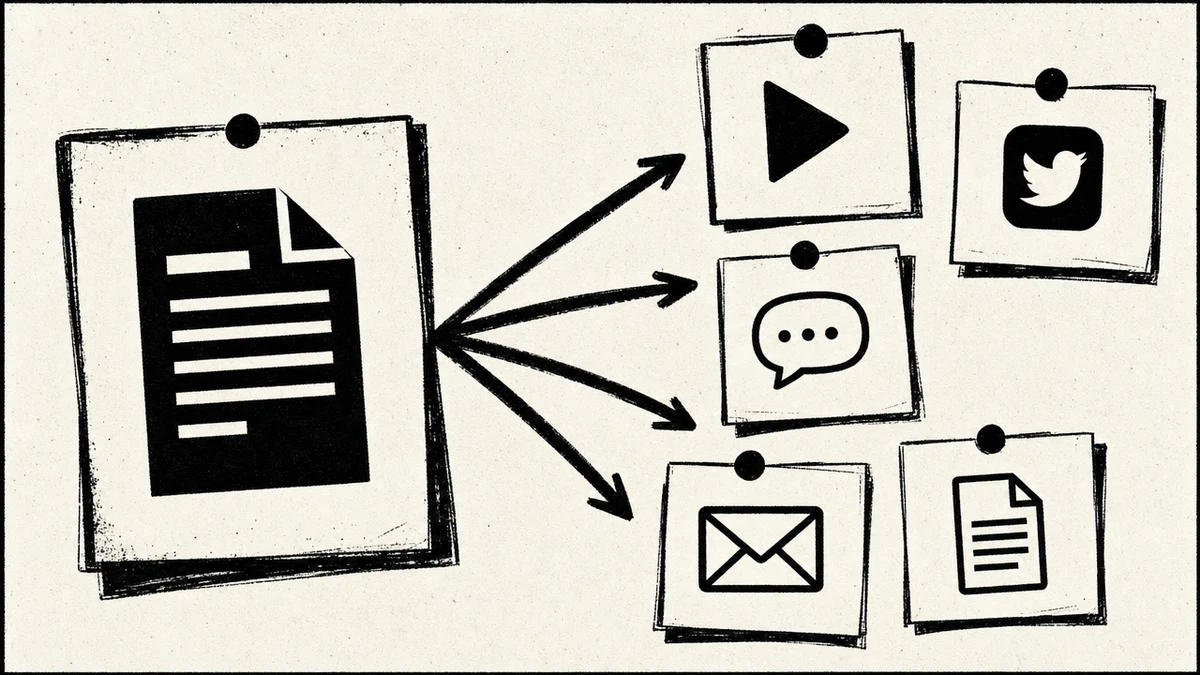
Here is the shape of the whole thing before I break down each step. You start with one source asset on the left and end with a set of channel-native drafts on the right, and the assistant carries your voice and audience through every hop.
I run this in five steps:
- Pick one strong source asset. Not your average post. The one worth mining.
- Teach the assistant your voice and audience once. Store it so it persists.
- Extract the reusable spine. The claims, examples, and the one line worth quoting.
- Reshape per channel. One prompt per format, each with its own rules.
- Review, then schedule. You are the editor. Nothing ships unread.
The order matters. Skipping step two is why most people get bland output and blame the model. The model was fine. It just did not know you.
Step 1: Choose a source asset worth mining
Not every piece deserves repurposing. Pick the asset that already earned attention or took real thought: a long-form guide, a conference talk transcript, a customer teardown, a launch announcement with a real story behind it. Depth is the raw material. A thin 400-word post gives you thin derivatives.
I look for three signals. The piece makes a clear argument, not just a summary. It has at least one concrete example or number. And it has a line or two I would happily say out loud. Those become the quotable moments across channels.
One source asset can realistically feed a week: a newsletter, three to five social posts, a short video script, and a couple of reply-ready snippets for conversations. That ratio is the whole economic case for repurposing. You did the expensive part once.
Step 2: Teach the assistant your voice once
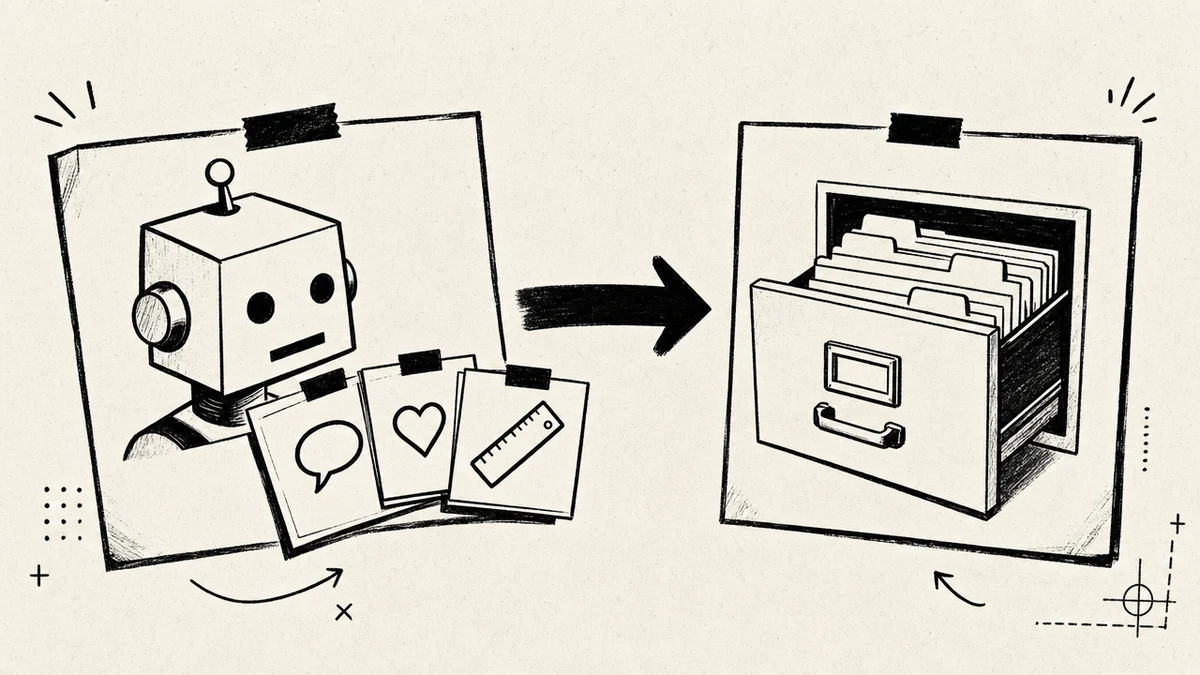
This is the step that separates a repurposing system from a one-off prompt. Before I ask for a single caption, I make sure the assistant holds three things as memory it will reuse on every future asset: how I write, who I am writing for, and what I never do.
I keep it concrete. For voice: short sentences, plain words, no exclamation marks, a dry aside is welcome, hype is not. For audience: founders and operators who skim on a phone and leave the second something smells like marketing. For the "never" list: no fake urgency, no engagement-bait questions, no emoji.
The reason to store this rather than paste it each time is compounding. When the assistant can write to a memory store it controls, the voice card is loaded automatically on every job, and it gets sharper as you correct it. I explain how an assistant reads and writes its own memory in how to build a second brain with an AI agent. The store I use for this is Iwo's Second Brain on top of Iwo's MemoryOS, an MCP memory server that works across Claude Code, Claude Cowork, Claude Desktop, Cursor, and Windsurf, so the same voice profile follows me into whatever tool I am drafting in that day.
If you want to see how this fits a wider daily practice rather than just content, my how-to on using AI for real work covers the same recall-first habit applied to tasks beyond writing.
Step 3: Extract the reusable spine
Before reshaping, I have the assistant pull the source down to its bones. I ask for the core claim in one sentence, the three to five supporting points, the best concrete example, and the single most quotable line. That is the spine, and every channel piece hangs off it.
This step is worth its own prompt because it forces a decision about what the piece is actually for. If the assistant cannot state the core claim in one sentence, the source was muddier than I thought, and that is useful to learn before I spread the mud across five channels.
The spine also keeps the outputs coherent. Because every derivative traces back to the same claim and examples, the newsletter and the video script reinforce each other instead of wandering. You get a campaign, not a scatter of unrelated posts that happen to share a publish week.
Step 4: Reshape into channel-native formats
Now the fan-out. I run one focused prompt per channel, and each carries its own rules so the assistant is not guessing at platform norms. A few that I keep as standing instructions:
- Newsletter. Lead with the sharpest idea, one story, one takeaway, a real subject line. No "in this issue" preamble.
- Short social posts. One idea each, no threads unless the idea genuinely needs steps, plain language, no hook-bait opener.
- Video or audio script. Written to be spoken, so shorter clauses, a strong first ten seconds, and a single point per beat.
- Reply snippets. Two or three ready answers I can drop into DMs or comments when the topic comes up.
Here is a compact view of how one long-form source maps out.
| Source asset | Channel output | What changes | What stays |
|---|---|---|---|
| Long-form guide | Newsletter | Tighter, one takeaway, personal framing | The core argument |
| Long-form guide | Social posts | One idea per post, no preamble | The quotable lines |
| Long-form guide | Video script | Written for the ear, first 10s hook | The examples |
| Long-form guide | Reply snippets | Conversational, short, drop-in ready | The stance |
Because the voice and audience live in memory (step two), I do not restate them in each prompt. I just say "repurpose the spine for [channel]" and the stored profile does the rest. That is the difference memory makes: the prompts get short because the context is already loaded.
Step 5: Review, edit, and schedule
The assistant drafts. I edit. That order never flips. AI content repurposing gets you to a strong first draft in minutes, but the judgment about what actually ships is yours, and treating a draft as final is how repurposing turns into slop.
My review pass is fast because I know what to look for. Does each piece sound like me, or did a generic tone creep back in? Is there a claim I cannot stand behind? Did the same phrasing repeat across three posts (a tell that the model leaned on one pattern)? I fix those, and I feed the corrections back so the voice profile sharpens for next time.
Then it goes into whatever scheduler you already use. The workflow does not need a special publishing tool. It needs a good source, a well-taught assistant, and a human who still reads before hitting go.
How this compounds over a quarter
The first time you run this, the setup tax is real. You are choosing a source, teaching voice, and building your per-channel prompts. Call it an afternoon.
The payoff is the second, tenth, and fiftieth asset. The voice profile is already stored. The channel prompts are already written. Each new source drops into a machine that already knows how you sound and who you are talking to, so repurposing stops being a project and becomes a habit. Founders juggling their own marketing feel this most, which is why I put a version of it in my roundup of AI tools for founders.
The quiet win is consistency. When one argument shows up, in your voice, across a newsletter, your feed, and a short video in the same week, it lands harder than five unrelated posts ever would. Repurposing is not about volume. It is about making one good idea impossible to miss.
Where this breaks, and how I keep it honest
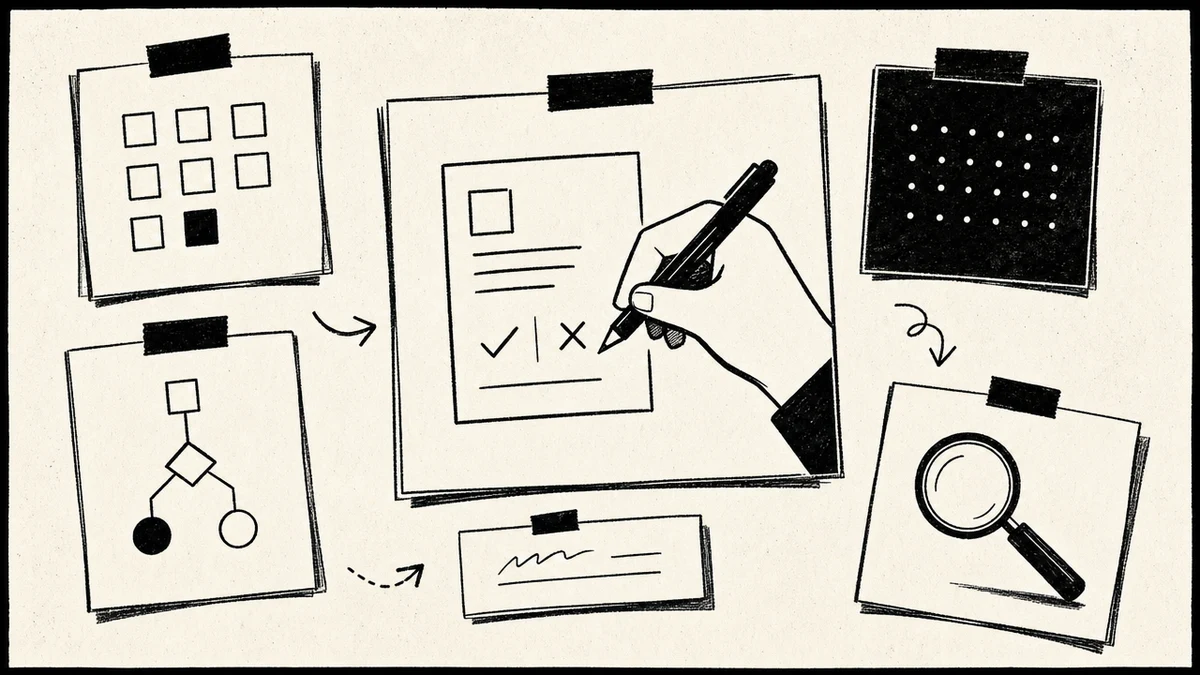
I have watched this workflow fail in a handful of predictable ways, so here is the honest list.
- Bland output. Almost always means the voice step was skipped or thin. Feed the assistant three of your best pieces and let it infer the patterns, then correct it.
- Same-y derivatives. If the newsletter and the posts read identically, your channel prompts are not distinct enough. Give each format its own rules and its own job.
- Volume for its own sake. Repurposing ten mediocre sources just multiplies mediocrity. Mine strong assets only.
- Skipping review. The moment you let drafts ship unread, quality drops and readers notice before you do. The human edit is not optional.
None of these are model limitations. They are process gaps, and each has a fix you control. The one gate I never remove is the final human read, because my name is on the output and a stored voice profile is a strong assistant, not a substitute for judgment.
Start your repurposing system this week
If you want to stand this up now, do it in this order. Pick one source asset you are proud of. Teach an assistant your voice and audience, and store that profile so it persists. Extract the spine, reshape it per channel with one prompt each, and review before anything ships.
The part worth investing in is the memory, because that is what makes every future asset cheap to repurpose. Iwo's Second Brain ships the store and the typed memory that hold your voice and audience as recallable facts, on Iwo's MemoryOS, so your assistant walks into every repurposing job already knowing how you sound.
The single next step, if you take one: run the free Health Check. It scores what your current setup already remembers and shows you the gap before you spend a cent, with paid tiers from $199 a year if you decide to go further. Pricing is current as of mid-2026 and moves, so confirm on the product page before you commit. For the broader setup this sits inside, start with the AI second brain guide.
FAQ
What is AI content repurposing?
AI content repurposing is using an AI assistant to reshape one source asset into pieces native to other channels, keeping the argument while rebuilding the delivery. It is different from recycling, which posts the same text everywhere. Done well, a thread, a newsletter, and a video script can all trace back to one essay while reading as if each was written for its channel.
How is repurposing different from just reposting?
Reposting duplicates the same content across platforms. Repurposing keeps the core idea but rebuilds the format so each piece fits its channel's norms and length. A repurposed newsletter leads with a single takeaway, while a repurposed social post carries one idea with no preamble, even though both come from the same source.
Why does an AI assistant need memory to repurpose well?
Without memory, the assistant regresses every output to the platform average, which reads as generic. An assistant with persistent memory recalls your voice and audience before drafting, so the pieces sound like you rather than like everyone. Storing that profile once, for example in Iwo's MemoryOS, means every future asset is repurposed against the same context automatically.
How many pieces can I get from one source asset?
A strong long-form source can realistically feed a week of channel-native content: a newsletter, three to five social posts, a short video or audio script, and a couple of reply-ready snippets. The ratio depends on how deep the source is. A thin post yields thin derivatives, so mine your best work, not your average.
Do I still need to edit what the AI produces?
Yes, always. AI content repurposing gets you to a strong first draft fast, but the judgment about what ships is yours. Review each piece for voice, accuracy, and repeated phrasing, then feed corrections back so the stored profile sharpens over time. Treating a draft as final is the fastest way to turn repurposing into slop.
What tools do I need to start?
An AI assistant, a source asset worth mining, and ideally a memory layer that stores your voice and audience so you are not re-teaching it each time. I run mine across Claude Code, Cowork, Desktop, Cursor, and Windsurf on one shared memory store, so the same voice profile follows me into any tool. My how-to on using AI for work covers the recall-first habit this depends on.
One good idea deserves more than one publish. Iwo's Second Brain stores your voice and audience as recallable facts on Iwo's MemoryOS, so an AI assistant repurposes every source asset in your voice from the first draft. For the broader setup, start with the AI second brain guide.