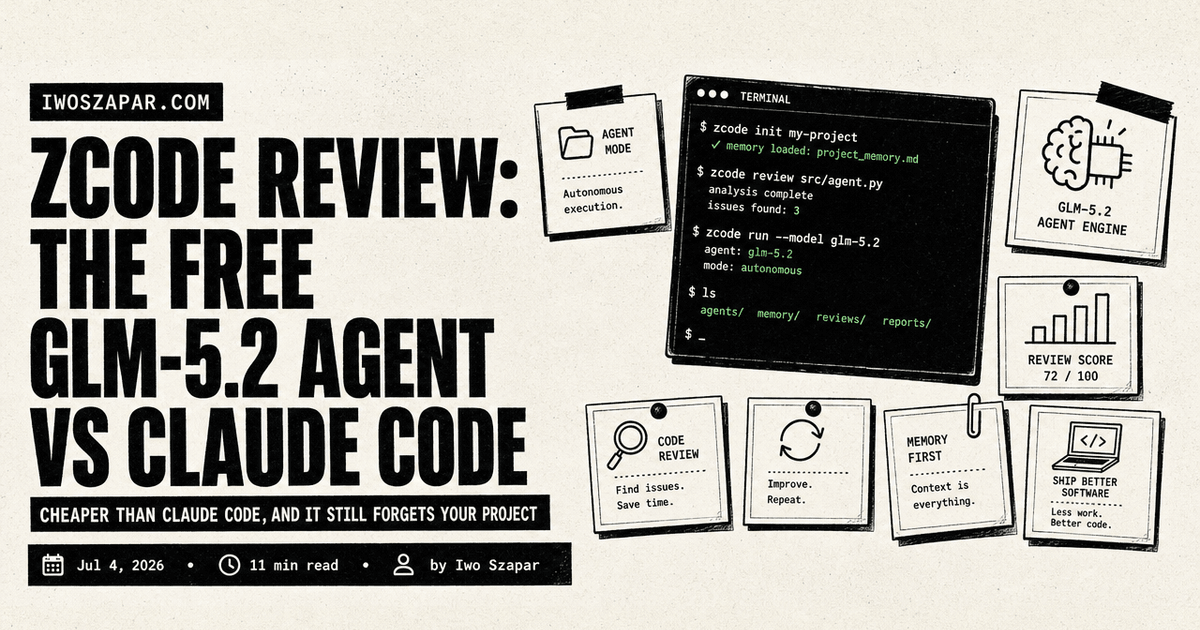
ZCode review: the free GLM-5.2 agent vs Claude Code
Cheaper than Claude Code, and it still forgets your project
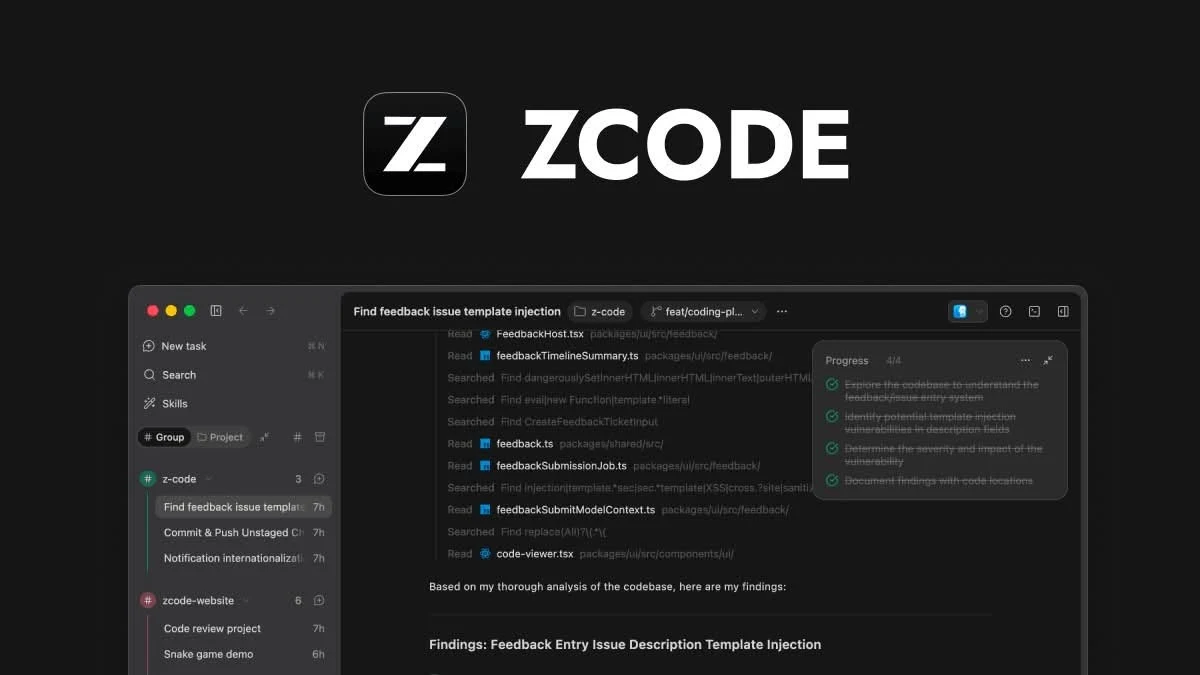
ZCode is a free desktop coding agent from Z.ai (the Beijing lab formerly known as Zhipu AI), built around its GLM-5.2 model. It bundles an AI agent, a file manager, a terminal, a Git panel, and a live browser preview into one app for macOS, Windows, and Linux, and it runs the same model plans and MCP tools that Cursor and Claude Code do, for a fraction of the price.
That last part is why it is everywhere this week. So I spent real time with it, read the docs and the benchmarks, and wrote down what actually holds up. Short version: the price story is real and you should probably try it. The capability gap with Claude is smaller than pride would like. And there is one thing ZCode does not do, that Claude Code does not do either, that matters more than any of it.
What ZCode actually is, and what is free
ZCode is what Z.ai calls an agentic development environment. Instead of a chat sidebar bolted onto an editor, the agent is the product. You describe an outcome in plain language, and it plans the work, edits files, runs commands, reads the output, reviews itself, and iterates. It can even be driven from your phone or from a chat app while it keeps working on the desktop.
Here is the pricing most of the headlines skip. The ZCode app itself is free to download and run. New users get a five-day trial with a daily token allowance and no card. After that you pay for the model, one of two ways: a GLM Coding Plan subscription from Z.ai, or bring your own API key and pay whoever hosts the model. So the harness is free. Sustained use is not, it is just a lot cheaper than the US tools, which is the whole pitch.
ZCode vs Claude Code, Cursor, Copilot, and Antigravity
Here is the honest lay of the land in mid 2026. Read the fourth column twice.
| Tool | Entry price | Default model | Context window | Native memory across sessions | MCP memory servers | Self-host option |
|---|---|---|---|---|---|---|
| ZCode | Free app, GLM Coding Plan from $18/mo | GLM-5.2 | 1M tokens | No | Yes | Yes (MIT weights) |
| Claude Code | From $20/mo (Pro) | Claude Opus 4.8 | 200K tokens | No | Yes | No |
| Cursor | Free tier, Pro $20/mo | Frontier models | Model-dependent | No | Yes | No |
| GitHub Copilot | Free tier, Pro $10/mo | GPT and Claude | Model-dependent | No | Partial | No |
| Google Antigravity | Free preview | Gemini 3.1 | Model-dependent | No | Partial | No |
Every agent in this table forgets your project between sessions. Column five is the real differentiator, and it is a wall of No. Price and model quality get all the attention, and they are the columns that are already crowded with strong options. The blank column is the one nobody is fighting over, and it is the one that quietly costs you the most.
Is GLM-5.2 as good as Claude for coding?
Close, and cheaper, but not better at the hard stuff. GLM-5.2 is a large mixture-of-experts model with a genuinely usable one-million-token context window and an unrestricted MIT open-weights license, which means a company can self-host it and never touch a vendor API. On coding tasks it lands just behind Claude Opus 4.8 and ahead of the previous generation. Z.ai's own numbers put it at 62.1 percent on SWE-Bench Pro against 69.2 for Opus 4.8, with a review from Lenny's Newsletter calling it good enough to replace Opus for some coding workflows.
Two honest caveats. First, those benchmarks are Z.ai's own numbers on Z.ai's own site, so treat them as a claim, not a verdict. Independent testing is only starting to appear, and it is mixed: security firm Semgrep found GLM-5.2 actually beat Claude on their cyber benchmarks. Second, the gap widens on the hardest agentic and reasoning tasks, where Opus 4.8 still leads. GLM-5.2 wins on price, not on peak capability. For a large share of everyday coding, that trade is a bargain. On the gnarliest long-horizon problems, the pricier model still earns its keep.
How much does ZCode and the GLM Coding Plan cost?
The GLM Coding Plan has three main tiers, billed monthly with discounts for longer commitments:
- Lite, $18 per month, roughly 80 prompts every five hours and about 400 a week
- Pro, $72 per month, around five times the Lite usage
- Max, $160 per month, around twenty times the Lite usage
If you would rather pay per token, the GLM-5.2 API runs $1.40 per million input tokens and $4.40 per million output tokens. For comparison, Claude Opus 4.8 is $5 and $25. That makes GLM-5.2 about 82 percent cheaper on output tokens than Opus, and close to one sixth the cost of GPT-5.5. The savings are real, and for a heavy user they add up to real money each month.
Is ZCode safe and private?
This is the question the price tag should make you ask. Z.ai is based in Beijing, so if you use the hosted GLM Coding Plan or API, your code and prompts run on infrastructure subject to Chinese jurisdiction. For a solo developer on a side project that may be a shrug. For a company with a customer codebase and a compliance team, it is a real conversation.
The honest mitigation is the one Z.ai itself offers: the weights are MIT licensed and public, so you can self-host GLM-5.2 entirely on your own machines and never send a line of code to a vendor. That is a genuine differentiator over Claude Code and Cursor, which you cannot run offline. If privacy is your blocker, the answer is not to avoid the model, it is to control where it runs, and to control where its memory lives, which brings us to the part that actually matters.
Does ZCode have memory?
No, not the kind you think. This is the most-searched question about ZCode and the least honestly answered, so here is the straight version.
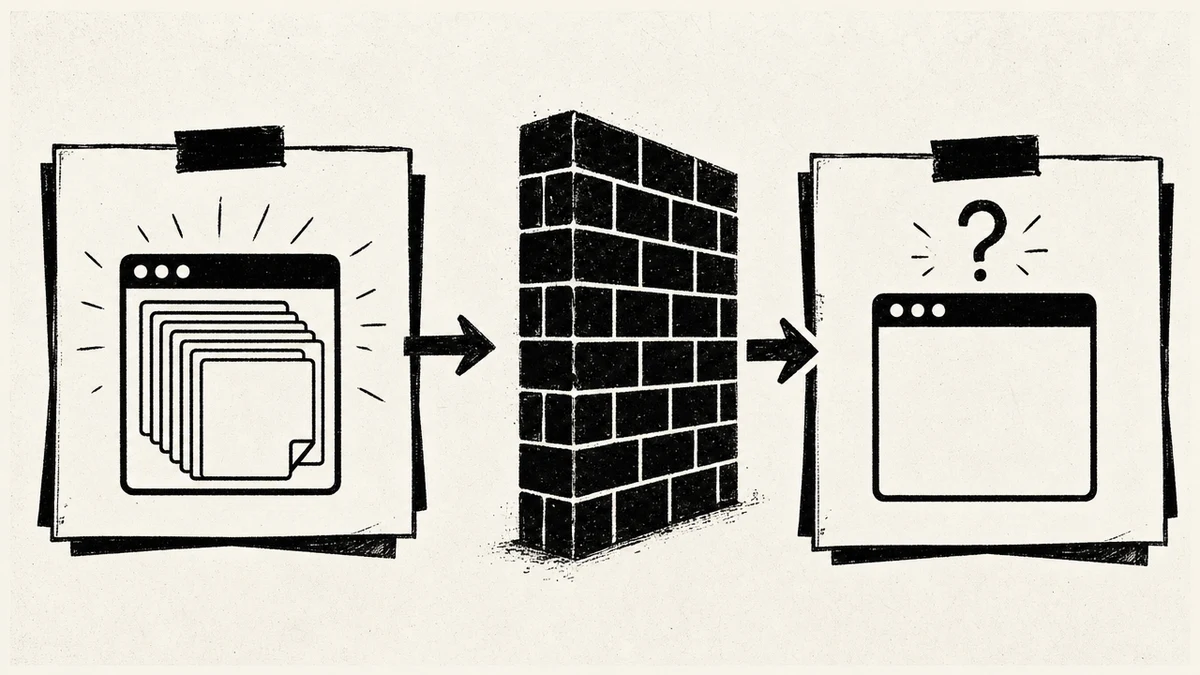
ZCode keeps context alive inside an active task. It holds your open files, terminal output, and Git state while a session runs, and it can resume the same task across your desktop and phone. That is state continuity, and it is nice. It is not memory.
The moment the process ends, the context is gone. A one-million-token window is enormous, but as Z.ai's own memory partner Mem0 puts it, that window is still wiped the moment the process ends. Long context is not long-term memory. Close ZCode, reopen it tomorrow, and the agent has forgotten your architecture decisions, your naming conventions, the library you rejected and why, the client's quality bar, and the bug you already fixed twice. You re-explain it all, again.
And here is the part that should change how you shop: Claude Code does the same thing. So does Cursor. So does Copilot. Every one of them is stateless by design. The re-explaining tax does not shrink when the model gets cheaper. It grows with your codebase. A $18 model that forgets your project can cost you more, in lost hours, than a $200 one that remembers it. Switching from Opus to GLM-5.2 saves tokens. It does nothing about the thing that actually slows you down.
How to give ZCode (or any agent) persistent memory

The good news is that ZCode already tells you the fix. It ships full support for MCP, the Model Context Protocol, and one of the first servers its own docs walk you through adding is a memory server. That is the tell. The winning setup in 2026 is not picking the smartest agent. It is giving whatever agent you use a persistent brain that survives every session and follows you across tools.
Here is the shape of it, in four steps:
- Pick a memory layer that speaks MCP, so it is not locked to one agent.
- In ZCode, open Settings, then MCP Servers, and add the memory server. ZCode can even import your existing MCP config from Claude Code, so you set it up once.
- Write your durable project context into that memory once: the decisions, the conventions, the do-not-do list.
- Point every agent you use at the same memory, so ZCode, Claude Code, and Cursor all read from one brain instead of five blank ones.
Do this and the model becomes a swappable part. You can chase the cheapest good-enough model this month and a different one next month, because the thing that actually holds your project, the memory, stays put. This is exactly what I build. Full disclosure, I make Iwo's Second Brain and Iwo's MemoryOS, a persistent memory layer that plugs into ZCode, Claude Code, Cursor, or all three over MCP, so your project context is written once and remembered everywhere. I am biased, and I also think the price war is a distraction from this, and I will show you why for free.
ZCode vs Claude Code: which should you use?
Use ZCode if cost is your binding constraint, if you want a genuinely capable agent for a fraction of Claude's price, or if you need to self-host a model on your own hardware for privacy. It is the best value on the market right now, full stop.
Use Claude Code if you live on the hardest long-horizon problems where Opus 4.8's edge in reasoning and self-correction pays for itself, or if sending code to China-hosted infrastructure is a non-starter and self-hosting is not an option. If you are also weighing Claude Fable 5, here is how its effort levels and cost stack up against Opus 4.8.
But notice that this whole choice is about the model, and the model is the part you can swap in an afternoon. Pick ZCode to save money. Just do not confuse a cheaper engine for a solved workflow.
The part the price war misses
Every few months a new model lands that is cheaper or a little smarter, and everyone re-litigates the same debate. GLM-5.2 is this month's, and it is a good one. But the reason your AI-assisted work does not compound is not that your model was too expensive. It is that your tools have no memory, so every session starts from zero and you are the only one carrying the thread.
The durable advantage is not the model. It is the memory that outlives it. Swap the model to save money. Keep the memory to keep your mind. Your Second Brain is blind without a memory layer, and now so is every coding agent you own.
FAQ
Is ZCode free? The ZCode desktop app is free to download and use, and new users get a five-day trial with a daily token allowance. Ongoing model usage is paid, either through a GLM Coding Plan from $18 per month or by bringing your own API key.
Does ZCode have memory across sessions? No. ZCode keeps context alive within an active task, but the model context is wiped when the process ends. For durable memory that survives restarts, you add an external memory server over MCP. It is not built in.
Is GLM-5.2 better than Claude for coding? It is close and much cheaper, but not better at the hardest tasks. On Z.ai's own benchmarks it sits just behind Claude Opus 4.8 and ahead of the previous generation. Those numbers are self-reported and not yet independently verified.
Is ZCode safe to use for private or company code? The hosted plans run on infrastructure subject to Chinese jurisdiction, which is a real compliance question for company code. The mitigation is that GLM-5.2 has MIT open weights, so you can self-host it and keep your code and its memory on your own machines.
Can I run GLM-5.2 inside Claude Code or Cursor? Yes. GLM-5.2 is available by API and ZCode supports bringing your own key, and other agents can point at the GLM-5.2 endpoint. The model is portable. Your project memory should be too, which is why a memory layer that speaks MCP matters more than which agent you open.
What is the best ZCode alternative if I want memory? The best move is not a different agent, it is adding a persistent memory layer to the agent you already like. A memory layer such as Iwo's Second Brain connects over MCP to ZCode, Claude Code, or Cursor, so the context follows you across whichever tool you open. For the broader picture, see the best AI second brain solutions and the guide to building a second brain with an AI agent.
Choose your next step
Choose the next layer for a more reliable coding agent
tutorial
Context Engineering Guide
Use the Context Engineering Guide to decide what belongs in durable instructions, memory, and tools before you hand an agent more access.
Make the agent useful with the context it needs
tutorial
Skill Evals
Agent Skill Evals gives you a practical way to turn one good agent workflow into a reusable skill with a check that catches regressions.
Test the workflow before you trust it